Fort Myers Water Damage Restoration, From the River District to McGregor
On September 28, 2022, the tide gauge near downtown recorded the river 7.26 feet above its normal high-tide line, and the streets filled. That's the extreme end of fort myers water damage restoration work. The everyday end is quieter: a washing machine hose, an air handler dripping into a closet, a roof that let go of a few shingles in a summer storm. Our team handles both, start to finish.
Water on the floor right now? Call (239) 555-0111 and we'll talk you through the shutoff while we get moving.
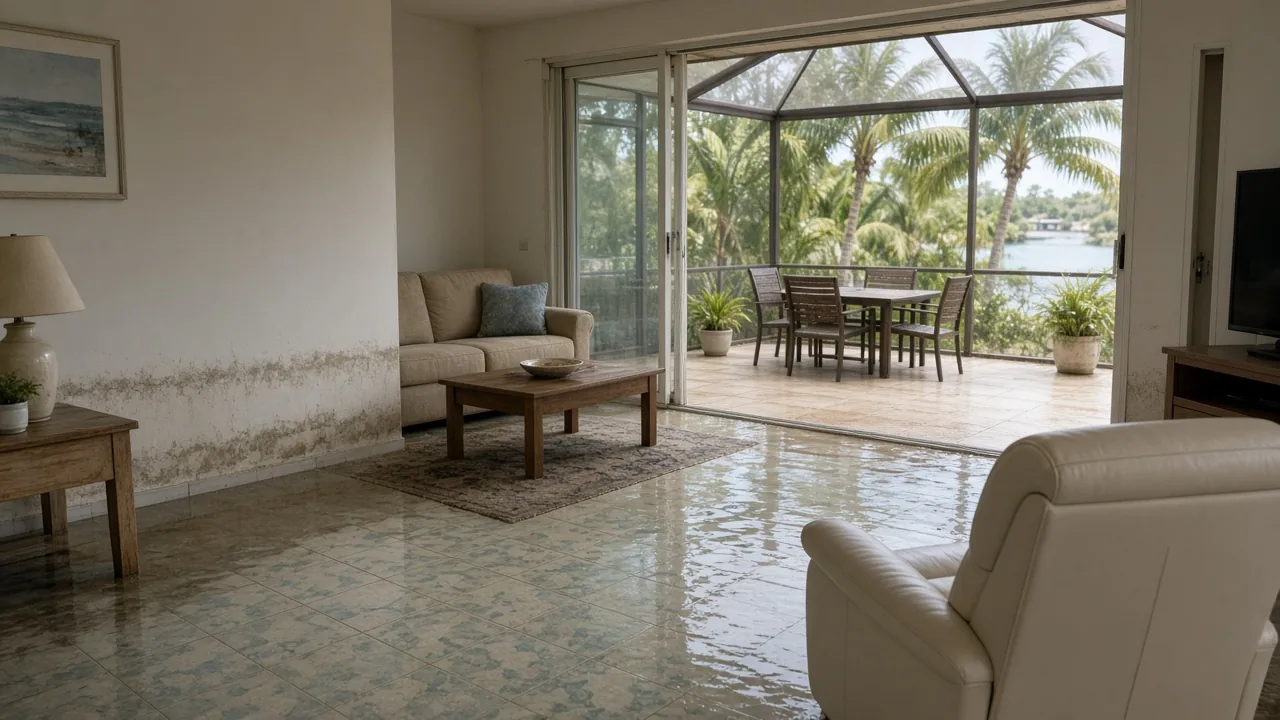
- Water extraction
- Moisture mapping
- Structural drying
- Repairs and rebuild
What the Caloosahatchee Taught This City in 2022
The National Hurricane Center's report on Hurricane Ian describes surge pushing up the Caloosahatchee River with enough force to reverse the river's flow. Inundation up the river in Fort Myers was estimated at 5 to 8 feet above ground. NOAA's storm database notes the old record at that gauge was 3.36 feet, set during Hurricane Gabrielle in 2001, so Ian more than doubled it.
Lee County emergency managers counted over 50,000 damaged buildings across the county, including 5,369 destroyed. Rainfall from the storm generally ran 5 to 10 inches. The lesson isn't that every storm will look like Ian. It's that saltwater, river silt and rain can all arrive in the same house, and each one needs different handling.
Newer Houses, Older Districts
Fort Myers is a young city by housing stock. The Census Bureau's 2024 estimate puts the median home's build year at 2004, and roughly six in ten homes date from 2000 or later. Those houses tend to have slab floors, drywall and modern supply lines, which dry predictably when we reach them fast.
Then there are the historic districts the City oversees: Dean Park, where most homes went up between 1916 and the mid-1920s, and Edison Park, which opened in 1926 across McGregor Boulevard from the Edison and Ford winter estates. Older framing, plaster and wood floors call for slower, gentler drying, and we plan for that from the first visit.
Our Order of Work
- Confirm the source is off and the power to wet rooms is safe.
- Pull standing water with truck-mounted or portable extractors.
- Map moisture with meters and thermal imaging, room by room.
- Remove what can't be saved, such as soaked pad, baseboard and wet insulation.
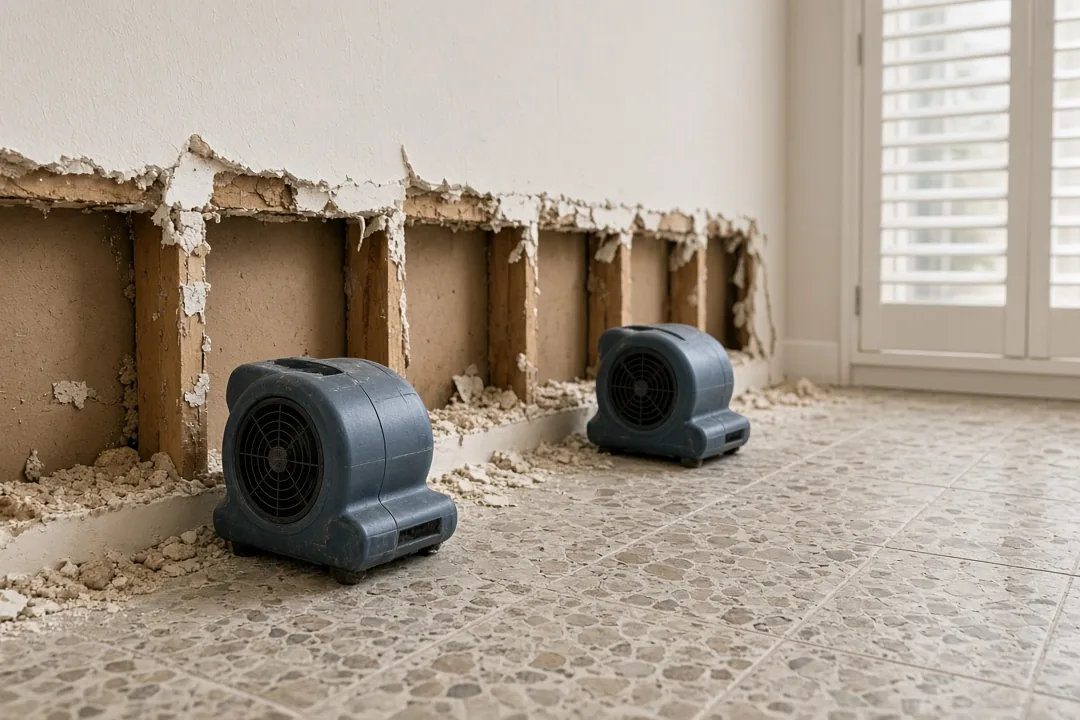
- Set air movers and dehumidifiers, then log readings daily until targets are met.
- Rebuild drywall, trim and flooring once the structure tests dry.
You get photos and a written moisture log for your insurer along the way.
Where to Go Next
- Water removal in Fort Myers homes, when the job starts with standing water on tile or carpet.
- Hurricane and surge cleanup for Fort Myers, for silt, saltwater and storm debris.
- Mold remediation in Fort Myers, FL, if a leak sat long enough to grow.
Fort Myers Local Notes
McGregor Boulevard is protected by state law as a historic highway, and the City's preservation plan covers four historic districts: Dean Park, Edison Park, Seminole Park and downtown. If your house sits in one of them, tell us early so exterior repairs can be planned around any review they need.
Inside the city we also work in the Downtown River District, Allen Park, Riverside and McGregor Estates.
Talk to a person, not a queue: (239) 555-0111.
Water damage help in Fort Myers
Water Removal
Standing water on tile, carpet or a garage slab? We extract it, find where it wicked into walls and set drying gear in Fort Myers homes. Call to start.
Learn moreHurricane & Surge Cleanup
After a hurricane, Fort Myers homes can hold saltwater, river silt and rain at once. We remove, sanitize and dry each layer, then rebuild. Phone Our Team.
Learn moreMold Remediation
Musty closet, spotted drywall or growth behind a vanity? We find the moisture, contain the area, remove mold and dry Fort Myers, FL homes. Call today.
Learn more
Questions Fort Myers Owners Ask
Does salt from surge water change the cleanup?
Yes. Salt and silt stay in porous materials after the water drains, so drywall, insulation and carpet pad that sat in surge water are usually removed rather than dried in place.
Can a newer slab home dry without tearing out walls?
Often, if we arrive within the first day or two and the water was clean. Meters tell us how far it wicked up before anything is cut.
Do you work in the historic districts?
Yes. We plan drying and repairs around older materials and flag exterior changes that may need City review.
Which photos help my claim most?
The source, the waterline on walls, damaged contents and any outside storm damage, ideally before anything is moved.
What happens when you call
- 1
Start with a call
Call (239) 555-0111 and describe where the water came from and which rooms are affected.
- 2
Pick a time
We follow up to confirm the details and set an inspection time that works for you.
- 3
Water out, structure dried
Water is extracted, moisture is measured and the structure is dried before repairs begin.